
The small finance bank model may still be testing the water some 10 years since its launch. According to banking experts, the regulator has taken a cautious approach in granting approvals. Unity Small Finance Bank was the last one to get a licence in the category in November 2021.

This shortfall could continue to hurt loan growth in 2016-17.

Banks' gross non-performing assets (NPAs) and net NPAs are expected to rise to 10.1-10.6 per cent and 3.1-3.2 per cent, respectively by March 2021, Icra said on Monday. The agency also expects net NPA to decline to 2.4-2.6 per cent by March 2022. "As moratorium on loan repayments is over and though we await the Honourable Supreme Court directive on asset classification, the GNPAs and NNPAs for banks are likely to rise in near term to 10.1-10.6 per cent and 3.1-3.2 per cent, respectively by March 2021 from 7.9 per cent and 2.2 per cent, respectively as of September 2020," the rating agency said in a report.

The country's real GDP growth in the first quarter will be better than the Reserve Bank's estimate of 8 per cent, economists said on Tuesday. Economists at the country's largest lender SBI pegged the growth at 8.3 per cent while domestic rating agency Icra estimated it to come even higher at 8.5 per cent. The Reserve Bank of India (RBI), which expects the GDP to grow at 6.5 per cent in FY24, has estimated a growth of 8 per cent in the April-June period.

ICRA said on Monday that domestic car sales is likely to grow by eight per cent annually over the next three years to 838,000 units in 2006-07, which will be driven largely by the compact and mid-size segments.
The economy is slated to grow by 6.9 per cent in this fiscal backed by a robust 9.0 per cent growth in farm output, credit rating agency ICRA said on Monday.

India's economic growth slowed to a 15-month low of 6.7 per cent in April-June 2024-25, mainly due to poor performance of the agriculture and services sectors, government data showed on Friday. The gross domestic product (GDP) expanded by 8.2 per cent in the April-June quarter of 2022-23. India, however, remained the fastest-growing major economy, as China posted a 4.7 per cent growth in April-June 2024.

The second wave of the pandemic in the country has derailed the recovery momentum of the domestic auto industry, which was poised for a comeback in the current fiscal after witnessing the two consecutive challenging years, ratings agency ICRA said on Thursday. Unlike the first wave where infections were largely localised to urban clusters, the second wave has seen deeper and wider penetration, including into rural hinterlands. Accordingly, outlook for various segments has been revised downwards, it said.

The government on Tuesday proposed reducing the long-term capital gains tax on immovable properties to 12.5 per cent from 20 per cent, but removed the indexation benefits to adjust for inflation, a move experts termed as "negative" for sellers.
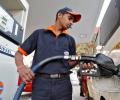
Global oil prices have slumped and India has access to larger amounts of discounted Russian crude oil, yet refiners are not passing on their savings to consumers

Retail inflation in August inched up to 3.65 per cent, though vegetables and pulses witnessed price rise in double digits, according to official data released on Thursday. The retail inflation based on the Consumer Price Index (CPI), however, remained below the Reserve Bank's median target of 4 per cent for the second month in a row. It was at a five-year low of 3.6 per cent in July.

Equity mutual funds witnessed an inflow of Rs 35,943 crore in November, marking a drop of 14 per cent on a month-on-month basis, amid heightened volatility in stock markets driven by various macroeconomic factors, geopolitical events and US election results. Despite this, it marked the 45th consecutive month of net inflows into equity-oriented funds, reflecting the growing popularity of mutual funds among investors, according to data from the Association of Mutual Funds in India (AMFI) released on Tuesday.
Credit rating agency ICRA has said that mergers are one of the best options for growth of Indian banks but warned that it may not solve some "basic problems" of Indian banks plagued by inferior asset quality, poor management and lack of autonomy.\n\n\n\n

On the back of robust tax collection, the ratio of direct taxes to gross domestic product (GDP) this financial year is likely to be the highest in this century so far. This, along with strong goods and services tax (GST) collection, may drive up receipts from central taxes as a proportion of GDP to the highest level or close to the highest since 2008-09 despite subdued excise and customs duty receipts. This will be due also to lower nominal GDP projected in the first advance estimates for 2023-24.
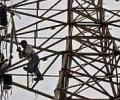
The government's decision to impose 21 per cent on imported power gear would increase the cost of electricity generated from future plants by about two per cent, according to rating agency Icra.

India may have to lean more on West Asian nations for supplies of liquefied petroleum gas (LPG), a cooking fuel, in the coming years after Indian state-run refiners drew up big plans to diversify into producing more profitable petrochemicals. This shift leads to reduced LPG output, Indian refining executives said. The mantra for state-run oil companies, from Indian Oil Corporation (IndianOil) to liquefied natural gas (LNG) importer Petronet LNG, which are looking to diversify their businesses from lower-margin fuels, has been value-added petrochemicals.

Equity-focused schemes may perform better in a bull market, while debt-oriented ones may offer greater stability during volatile periods.

The government has slashed by up to 20 per cent the supplies of cheaper domestically produced natural gas to city retailers -- a move that may result in Rs 4-6 per kg hike in the price of CNG sold to automobiles, unless excise duty on the fuel is cut, sources said. Natural gas pumped from below the ground and from under the seabed from sites ranging from the Arabian Sea to Bay of Bengal within India is the raw material that is turned into CNG for sale to automobiles and piped cooking gas to households.

The government's move to tweak the long-term capital gains (LTCG) tax regime proposed in the Finance Bill 2024 and re-introduce the indexation benefit is likely to boost the investments and spur housing sales in the country, industry executives believe. "By enabling taxpayers to choose the lower tax burden between the new and old schemes, the amendment is poised to drive investment and enhance sales across housing segments," said Niranjan Hiranandani, chairman of the Hiranandani Group. In Budget 2024, Union Finance Minister Nirmala Sitharaman proposed an overhaul in the capital gains tax regime, including lowering the LTCG tax to 12.5 per cent from 20 per cent.

Even as the government debates whether to continue the FAME-II subsidy for electric vehicles (EVs), the share of such vehicles in overall sales is decelerating, after witnessing a heady growth in the first few years. The penetration of EVs - electric two-wheelers, passenger vehicles, three- wheelers and other segments collectively - in the first 10 months of FY24 has been pegged at 4.3 per cent, compared to 3.7 per cent in FY23, according to credit rating agency ICRA.

A cocktail of heatwave and upcoming cricketing events is expected to usher in the peak season for the country's largest beer maker, United Breweries. The beer maker, which has gained share in some key markets, will be a major beneficiary as April to July is an important period contributing to 40-45 per cent of its annual beer volumes. Going ahead, the T20 Cricket World Cup in June and the ongoing IPL will have a positive impact on volumes and should be able to offset the negative impact of elections on sales, experts believe.

'Any finality in such matters requires political views. We will review it closer to the full Budget.'

The growth of eight key infrastructure sectors slowed down to 4.3 per cent in May 2023 due to a decline in the production of crude oil, natural gas and electricity, according to the data released by the government on Friday. The core sector growth was 19.3 per cent in May 2022, while in April 2023, the key infra sectors recorded a growth rate of 4.3 per cent. During April-May this fiscal, the output growth of these eight sectors slowed down to 4.3 per cent against 14.3 per cent in the year-ago period, the data showed.

'There is no immediate threat to the government, and they would prefer the growth agenda.'
Contrary to government's claim that 8.0 per cent economic growth could be sustained, credit rating agency ICRA on Tuesday pegged GDP growth at 6.4 per cent for this fiscal.

This is contrary to the expectations of a majority of analysts predicting for another hike given the rise in inflation lately, including domestic ratings agency Icra

Retail inflation increased to four-month high of 5.08 per cent in June as food items, including vegetables became dearer, according to government data released on Friday. The Consumer Price Index (CPI) based retail inflation was on a decline since January, before rising again in June. The CPI-based retail inflation was 4.8 per cent in May 2024 and 4.87 per cent in June 2023.

Lower crude prices and dip in gold demand will push the CAD down.

Ratings are based on the overall exposure to default risk, with regard to timely receipt of payments from the investments the scheme has made.

In view of the rising number of mobile and internet banking users, the Reserve Bank of India (RBI) has proposed to tighten norms related to the liquidity coverage ratio (LCR) by increasing the run-off factor for retail deposits. "Banking has undergone rapid transformation in recent years. "While increased usage of technology has facilitated the ability to make instantaneous bank transfers and withdrawals, it has also led to a concomitant increase in risks, requiring proactive management," the RBI said in the draft guidelines released on Thursday.

The growth of eight key infrastructure sectors slowed to a 14-month low of 3.8 per cent in December 2023, on account of poor performance of sectors like crude oil, electricity, steel and cement, according to the official data released on Wednesday. The core sector (coal, crude oil, natural gas, refinery products, fertiliser, steel, cement and electricity) growth in November was 7.9 per cent. It was 8.3 per cent in December 2022.

The rise of startups and a thriving entrepreneurial culture in Tier-II and Tier-III cities is contributing to the increasing sales of high-end cars.

Adding petrol and diesel to GST was a challenging task due to their significant role as revenue generators for both the central and state governments.
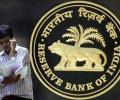
The Reserve Bank is likely to maintain status quo on interest rates in its forthcoming monetary policy review but may change the stance in view of retail inflation piercing its upper tolerance limit, global uncertainties created by the ongoing Russia-Ukraine war, and the urgency to protect and boost growth, feel experts. The RBI governor-headed rate setting panel -- Monetary Policy Committee (MPC) -- will be holding its first meeting of the 2022-23 fiscal from April 6 to 8. The outcome will be announced on April 8.
India's fixed-line telecom network is estimated to expand to about 47 million by March 2005 from 41.5 million in March 2003.

Credit outstanding to the housing sector rose by nearly Rs 10 lakh crore in the last two fiscals to reach a record Rs 27.23 lakh crore in March this year, according to RBI's data on 'Sectoral Deployment of Bank Credit'. Experts from banking and real estate sectors attributed this growth in housing credit outstanding to a strong revival in the residential property market post-COVID pandemic on pent-up demand. According to the data of the Reserve Bank of India (RBI) on sectoral deployment of bank credit for March 2024, the credit outstanding to the housing (including priority sector housing') stood at Rs 27,22,720 crore in March 2024, up from Rs 19,88,532 crore in March 2023, and Rs 17,26,697 crore in March 2022.

India's three-wheeler exports, which have been on a downhill trajectory over the past few years, are showing no signs of recovery in FY25, with key markets like Sri Lanka, Bangladesh, Nigeria, and Egypt witnessing subdued demand. In May, the country's exports plummeted 11.3 per cent year-on-year (Y-o-Y).
Following the footsteps of ICRA and CRISIL on rating corporate governance, credit rating agency Fitch will also take up such an exercise soon.

The two-wheeler segment has shown signs of recovery in the first half (H1) of calendar year (CY) 2024, largely driven by improving performance in rural areas. According to the Federation of Automobile Dealers Associations, rural contribution to two-wheeler sales surged by 57-60 per cent in the April-June quarter of 2024-25, indicating a rising demand in these regions. Experts believe that this trend will continue, supported by a favourable monsoon season and government initiatives aimed at rural development.
